Mustering some guster
(Susan)
About to get blessed with two more straight days of tailwinds after the two we had yesterday and the day before, we’ve decided to push on hard ahead to get some serious miles while we can. So itinerary change: tomorrow we’re going to try for Hinsdale and the following day for Harlem, because the forecast is for several days of strong headwinds after that. We might putter into Havre then and stay put for a day, depending.
Tonight we’re in Wolf Point, which is located in the vast Fort Peck Indian Reservation. Wolf Point’s economy seems to be two-fold: casinos and catering to the oil industry that’s centered in Williston, ND. Although Williston’s a hundred miles away, we still got the last hotel room at the place we’re staying tonight because it’s all full up with people staying here and commuting into the oil fields. Ever since Bismarck, we’ve been skirting the edge of the vast ripple effect of that development up there and it’s been really interesting seeing the effects and talking to people about it. Will write a post on this later.
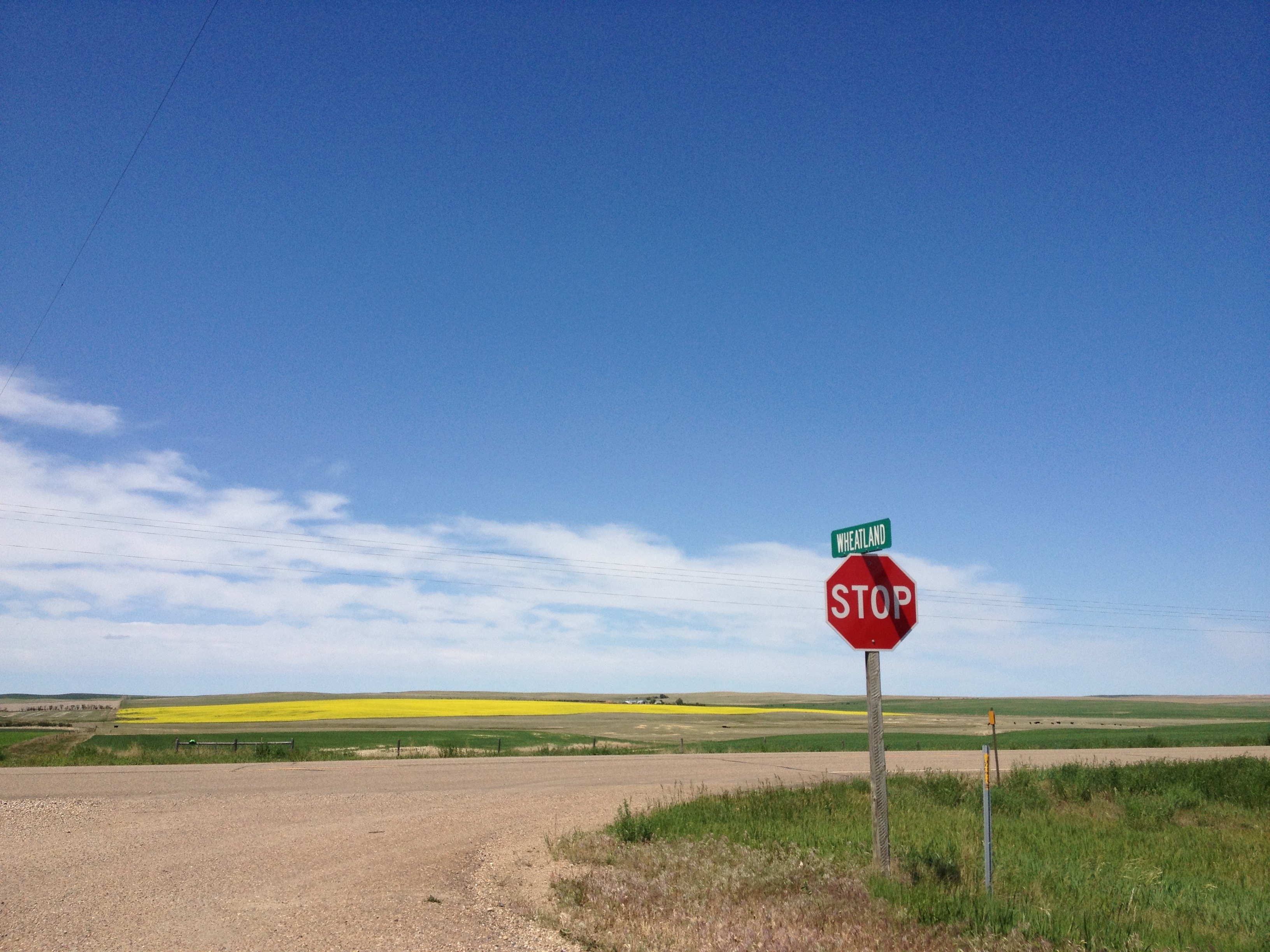
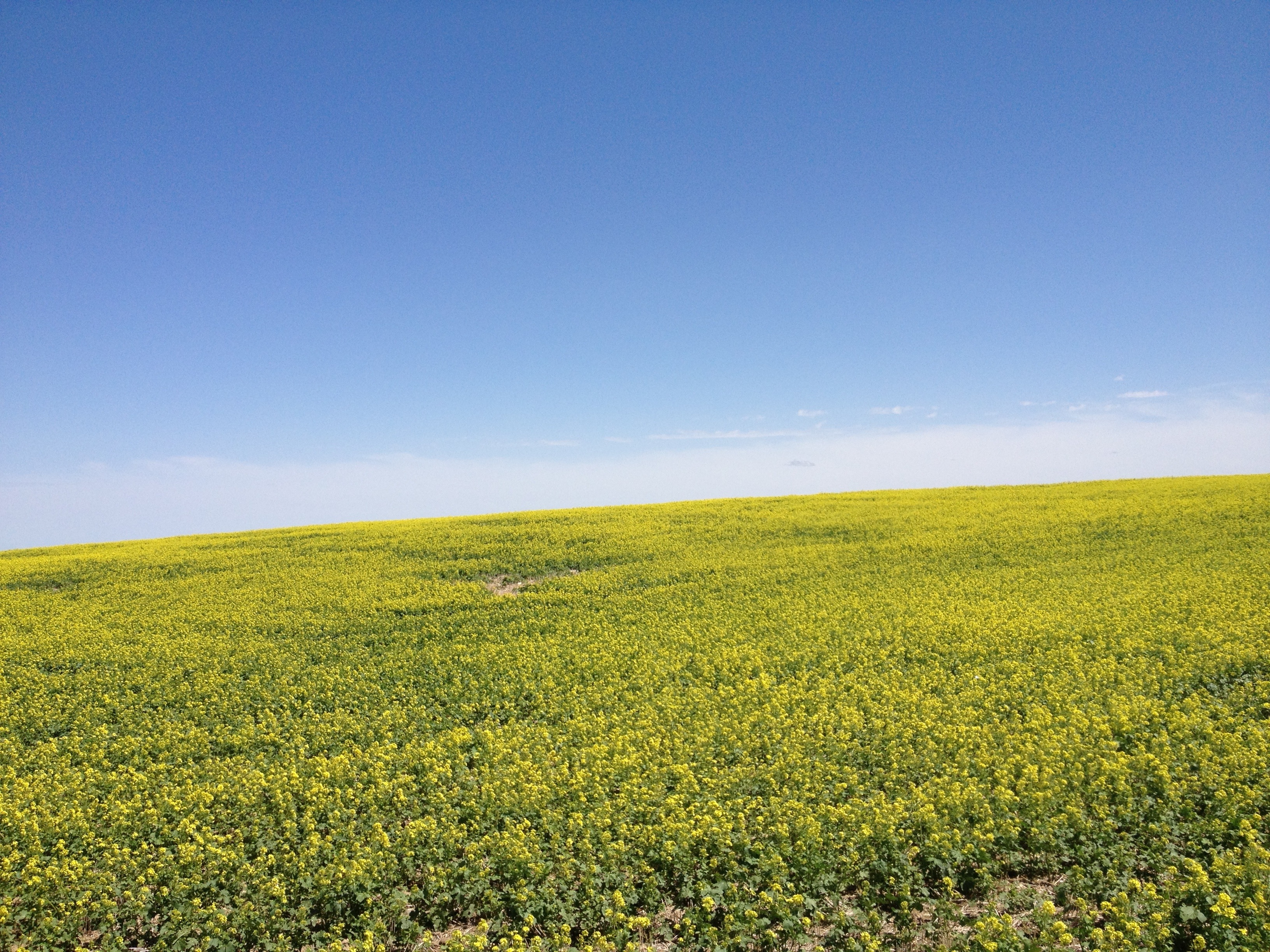
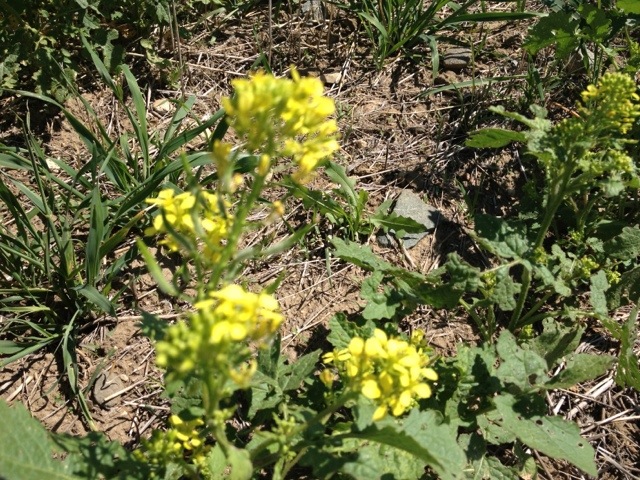
Today was a pretty uneventful ride. There was basically nothing between Circle and Wolf Point other than fields. We ran across a pair of strikingly yellow fields with a crop we’d never seen before. It was quite stunning. Does anyone know what this stuff is?
 Susan and Brice's Bike Blog
TinEye had no luck :(
Nathan thinks it’s canola, based on the leaves.
Methinks mustard? I thought your title was maybe a play on the topic.
http://en.wikipedia.org/wiki/Brassica_juncea
My mom also thinks it’s canola.
I also think it’s canola! Or rapeseed, as they call it in Britain, which is where I first saw it (we lost a frisbee into a field of it).
This Canola. Also known as Rape seed in Europe
looks like when you mustered some guster you found some (mustard)
I’d agree. Probably canola. (I thought mustard at first but the leaves look wrong.)
everybody is right! Canola is a mustard :)
Yes, it is rapeseed (canola).
Canola (Brassica Rapa & others) & mustard (Brassica rupestris & others) are separate plants, but they are both in the genus Brassica.
This genus also includes other food plants: cabbage, cauliflower, broccoli, Brussel sprouts, etc.
Nice Wikipedia article: http://en.wikipedia.org/wiki/Brassica