Bike shorts
This is the first in a series of posts with clothing recommendations. Right now they just have Susan’s thoughts and lists of clothes; Brice will add his later. Recommended items are starred. Disrecommended items are X’d. Product names noted where known.
(Susan)
• *1 pa. Louis Garneau Zone 3K shorts
• 1 pa. De Marchi Women’s Contour shorts
I can’t underemphasize how important it is to have high-quality bike shorts for a long-distance tour. Previously, I was biking around town and on short tours with some cheapo Nashbar shorts, which cost perhaps 40 bucks or so. I realized that the big problem with these was that the chamois was unstructured and easily bunched up in the crotch, making it feel like I was biking with an extra-absorbent maxi pad on—quite uncomfortable and perhaps harmful in the long-term. On the enthusiastic recommendation of the owner of Proteus Bikes in College Park, MD, I picked up a pair of these LG shorts and rounded out my collection with the De Marchis, which were well-reviewed on Nashbar. (I second the consensus online that the De Marchi shorts run very small, order a size up.) Both were around 100 bucks each, which seems like a staggering sum for shorts until you think about the facts that you will be wearing them every day and that they are a key determinant in your relative misery while biking.
As Jill at Proteus promised, the LG shorts are the clear winners in my mind. If I could have started over, I’d have bought two pairs of them instead. With both the LG and De Marchi, the chamois stays nicely in place and unbunched. However, the LG chamois is much firmer than the De Marchi’s, which makes the LGs much more comfortable. Brice could always tell when I was wearing the De Marchi shorts because I’d start shifting uncomfortably in my saddle shortly after we started riding, my nerves feeling pinched and tingly, whereas in the LGs, it took a full day before I started to feel uncomfortable on the bike. I also preferred the LGs’ fabric, which was some sort of more breathable, waffled material rather than the straightforward Lycra-like stuff of the De Marchis. The only slight advantage of the De Marchis is that they dried overnight after a washing, but if you carry two pairs of shorts, which you should, that won’t much matter.
Both pairs of shorts are showing signs of wear in the butt after the long ride, but are still good for more rides.
Wheels
Tourers prefer reliability to lightweight in most things and wheels are no exception. Any 32 or 36 spoke wheel of decent quality ought to be just fine unless either you or the stuff you’re going to carry is exceptionally heavy. I would recommend getting your wheels trued and hubs checked out by a good mechanic before heading out; we met two different riders that left with older wheels that hadn’t been maintained and were having pretty big problems.
I actually rode most of our trip with Mavic Cosmos wheels that really aren’t designed for touring though they worked fine. The freehub wore out at the end of the trip though (probably just due to age more than touring) and since the wheel used nonstandard parts, I had to get a new wheel. It’s probably worth leaving anything fancy that is incompatible with normal spokes/freehubs/rims at home.
brakes
Brakes are obviously extremely important. More critical than the type of brake or even brake adjustment (assuming the brakes work at all) is proper brake technique. Per usual, Sheldon already wrote the definitive article on the topic. If the statement “you shouldn’t use your front brake because you’ll go over the handlebars” sounds correct to you, please please please read the linked article.
Most touring bikes, including ours, use cantilever rim brakes. This style is a requirement for the wider tires that tourers generally prefer. Unfortunately, they require special attachment points on the frame that many road bikes don’t have; this is one reason that it’s important to have a frame designed for touring. Cantilever brakes are easy to adjust and maintain on the road but it does require some knowledge and experience to do so. To get the best performance out of them, it’s actually necessary to make adjustments as the brake pad wears. It’s worth taking the time to learn how to properly adjust them, especially because in my experience many bike mechanics mostly see caliper brakes and don’t really know how to set up cantilevers correctly (or that’s the conclusion I draw from getting my bike back from tune-ups with brakes that feel ok at first but in fact are set up with too little mechanical advantage).
Some touring bikes are now sold with disc brakes which generally offer more stopping power and much better performance in the rain. I’ve never owned a bike with disc brakes so I don’t have much to add, but certainly it would be important to be confident in understanding what can break and how to fix it before heading out on a long tour.
shifters
There are two styles of shifters in use on modern touring bikes. Integrated brakes/shifters and bar end shifters, which are basically a lever at the end of the handlebar and separate from the brake; you move the lever to shift gears. Both of our bikes have integrated shifters (Shimano Tiagras if anybody cares). While integrated shifters have many benefits – they are extremely easy to use and allow shifting from multiple hand positions, they’re one of the few components I would consider changing out if we took another trip. The downside is that the integrated shifter mechanism is a total black box to the rider. While they’re quite reliable, if an integrated shifter breaks or malfunctions, the chances of being able to fix it on the road are small. We met a rider who wasn’t able to use his front derailleur for a few hundred miles until he could get to a bike shop; if it’d been his rear derailleur he probably would have needed to get a ride.
Bar end shifters, on the other hand, are fairly foolproof. There’s a lever and it makes a cable longer or shorter depending on its position. If something does break, it’s likely that a solution can be cobbled together at a hardware store. The downside is that the shifters are less convenient and more finicky to use. I think it’s worth considering how long a tour is, how close you’ll be to bike shops along the way, and how it would impact the tour if you got stuck for a few days waiting for a replacement part before leaving with STI shifters. All that said, my shifters are 8 years old and are still working fine.
Frame
Both Susan and I rode Jamis Aurora bikes on the trip. Mine is an ’04 and Susan’s was ’09. Both are steel. While steel has long been the consensus frame material of choice for touring cycling, much of the reasoning behind this consensus is flawed or at least not particularly supported by facts. There’s an extremely detailed article on this topic (as about most cycling topics) written by the late great Sheldon Brown. The summary is that frame material is much less important than having a frame that’s designed for touring; that is one with a longer wheelbase (both for steering stability as well as to move the saddle forward of the rear wheel), ample braze-ons or other attachment points for racks, and adequate clearance for large width (at least 32mm) tires (including necessary attachment points for cantilevered brakes if necessary). Because of conventional wisdom about frame materials though, it’s hard to find a bike with these features made out of anything but steel.
Sheldonbrown.com is a great resource for more factual information. If you’re in the market for a touring bike and aren’t confident in your ability to determine fit/comfort for yourself, you need to find a Good Bike Shop. Good Bike Shops are hard to come by and there’s no super reliable way to find them. A good way to start is just to call around and see who carries any range of bikes designed for touring. Most stores are mostly focused on expensive carbon fiber racing bikes (to my knowledge none of which can be used for long term loaded touring) and will only have one model, if any, appropriate for touring. Once you go to the shops, the Good Bike Shop should have employees who seem willing to spend a long time with you discussing your actual needs even after they find out you aren’t buying carbon, rather than getting you out the door on two wheels. They should be familiar with, and ideally experienced with touring (or year round bike commuting). They should pay a lot of attention to the fit of the bike. If you feel any sales pressure at all, it’s probably not a Good Bike Shop. If there’s any hint of snobbishness, it’s probably not a Good Bike Shop. It will potentially take many hours to try out different sizes of bike and tweak the fit so plan accordingly. Usually it’s a good idea to go on weeknights (or during weekdays if you can swing it) as even Good Bike Shops won’t be able to hang out with you uninterrupted all weekend.
So: Fit/geometry is more important than frame material, and provided the above requirements are met, the other topics under the bike section are probably more important.
Last days photos
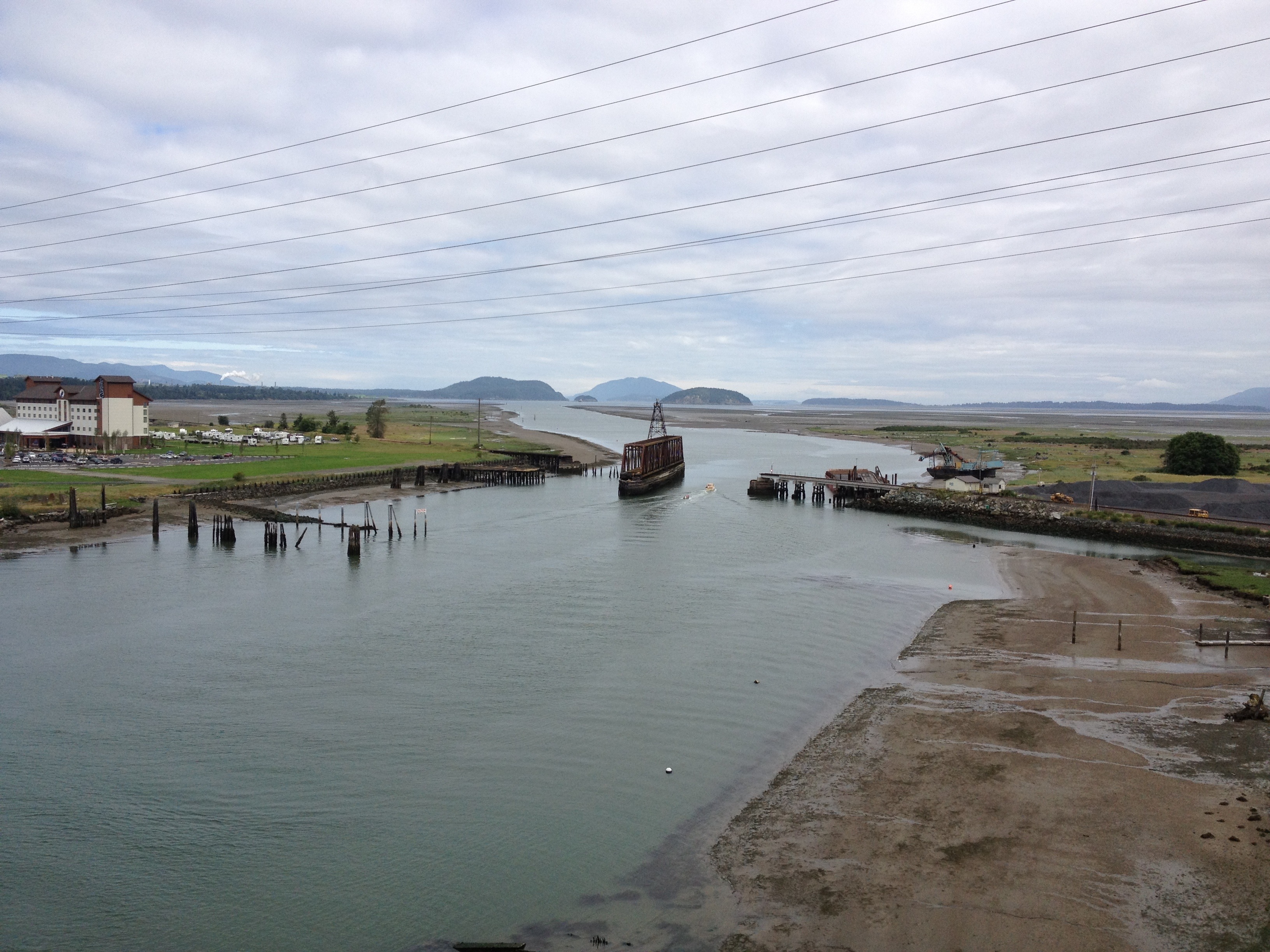
First view of salt water, Padilla bay:
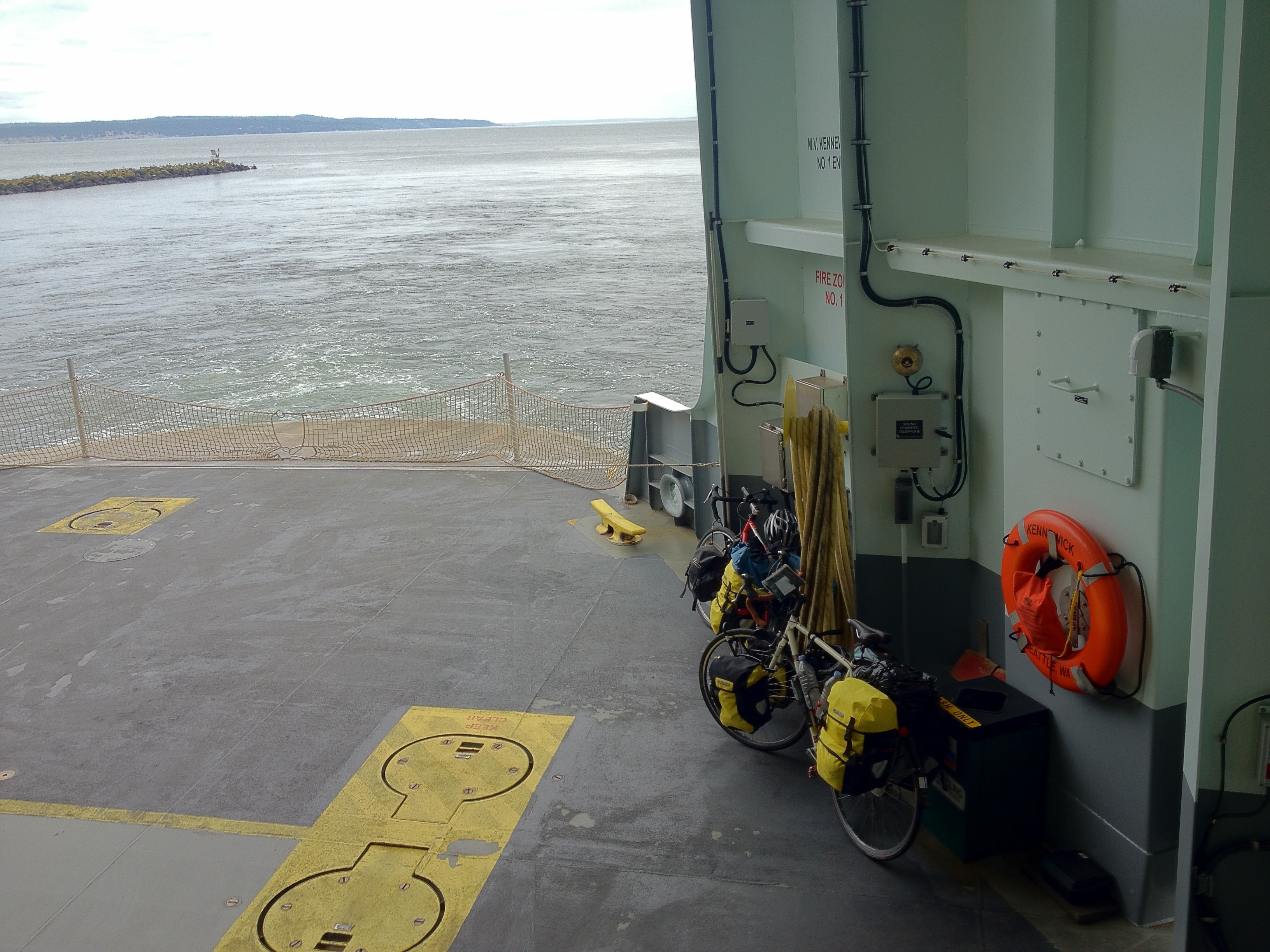
Bikes on the ferry:
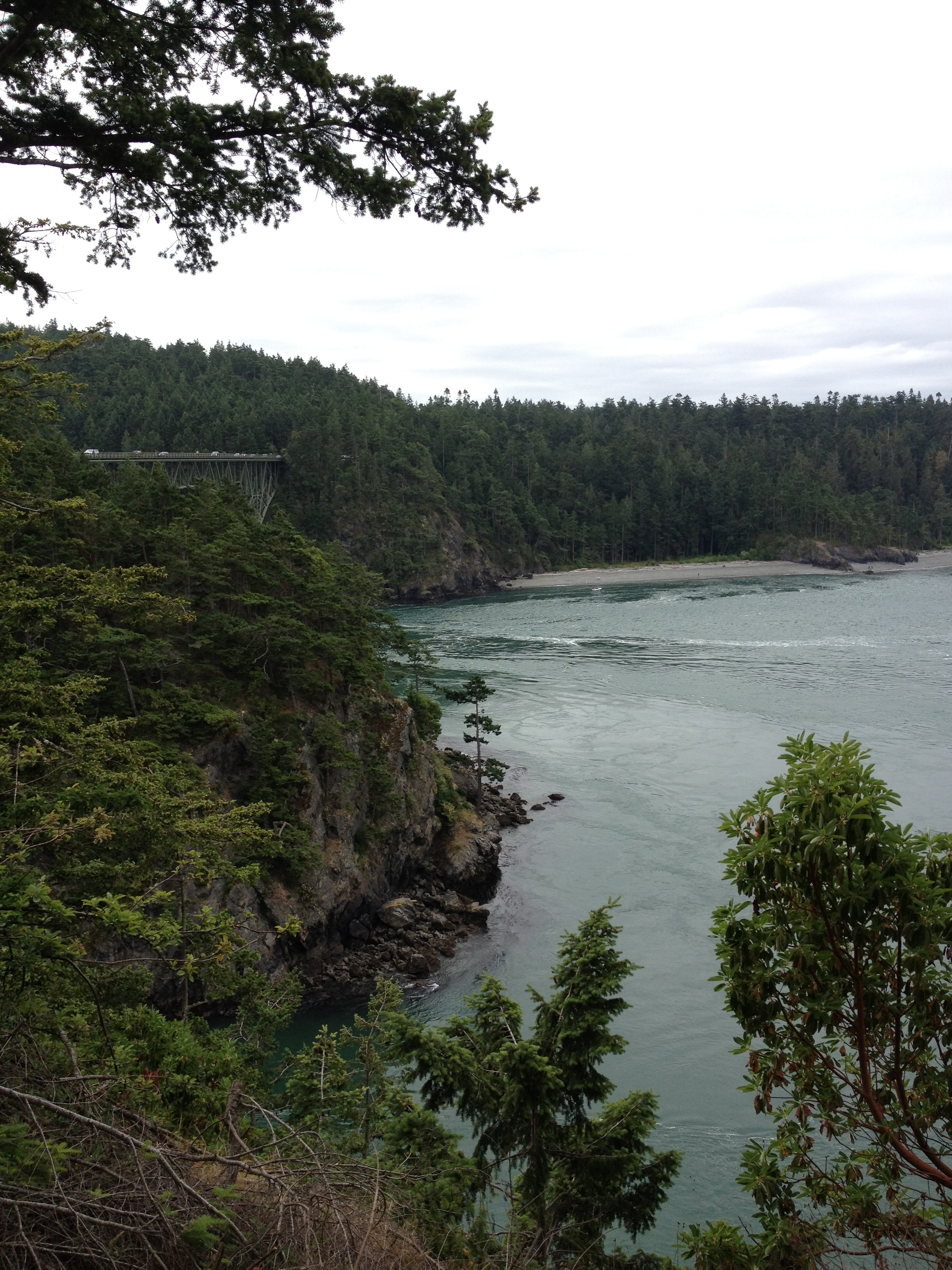
Deception pass:
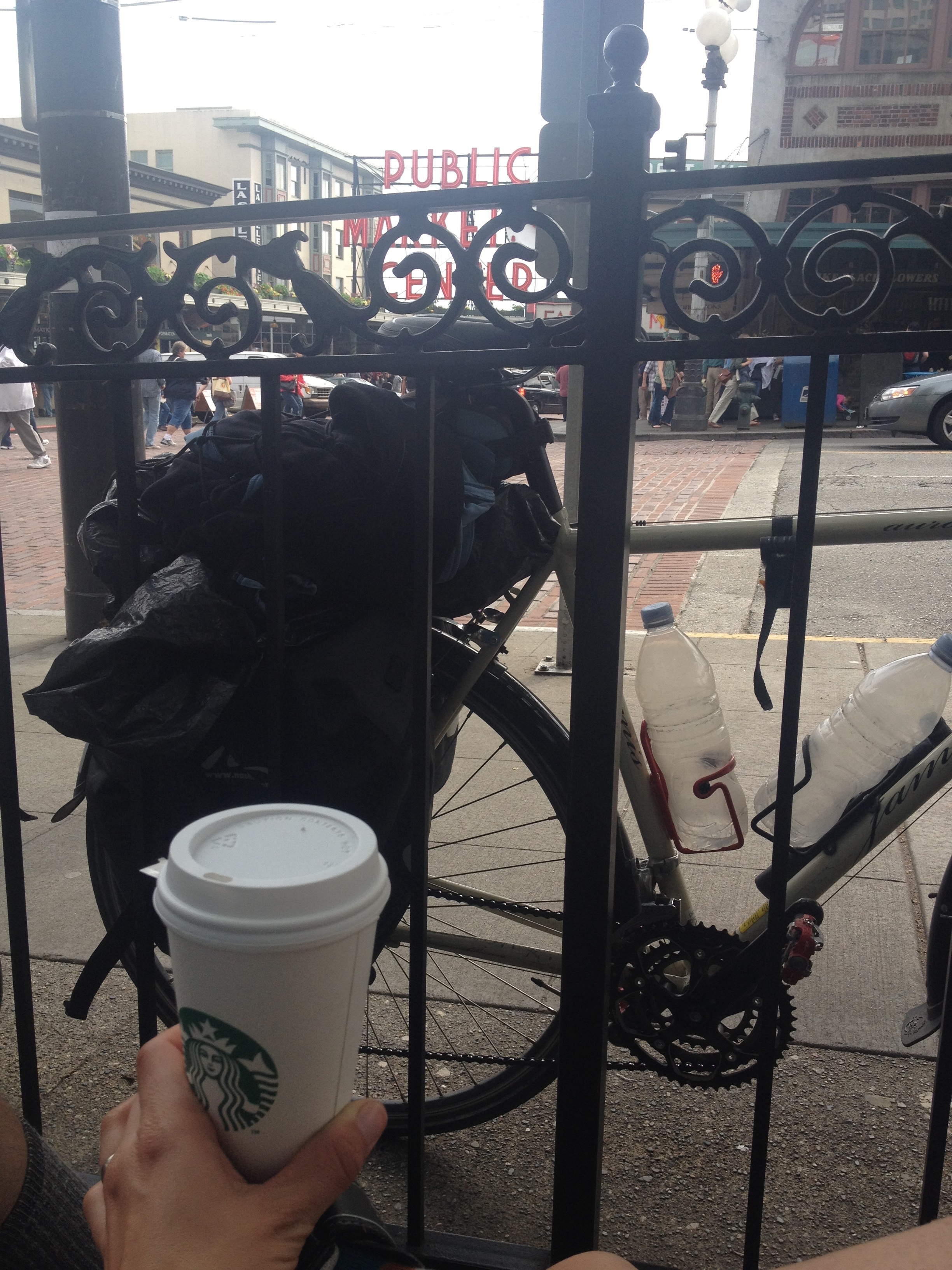
Pike place:
Last two days/settling in
Before too much time goes by I figured I should jot some notes about the last couple days of the trip for posterity. Sunday, we biked from Sedro Wooley past Anacortes, over deception pass to Whidbey Island, and then took the ferry to Port Townsend. While we didn’t get rained on, the skies were overcast, traffic was heavy (we saw more cars than we did in all of North Dakota), and most of the roads were kind of tree tunnels, so we took few pictures. After Washington pass, the riding was a bit… anticlimactic? There were still hills to climb and miles to cover, but I think we were both ready to be done.
Sunday night we spent at Fort Worden State Park, where there was an unexpected fiddling conference taking place. All the campsites were reserved (including the hiker biker sites which are normally not able to be reserved) but a friendly fiddler let us pitch our tent in the corner of his site. Monday, we biked down the peninsula to Bainbridge, getting lost for the first time since Ohio. I misread a sign and asked Susan if we were supposed to turn; she heard my question as a direction, and I took her making the turn as confirmation that my misreading was correct. A few miles later we were extremely confused to be right back where we had been earlier in the day… the wrong turn had lead us in a long circle, which was fortunate as we might have wound up much farther off route otherwise. I think the whole thing only took us about 8 extra miles but again it seemed like a good indicator that we were ready to be done.
The ferry from Bainbridge took us right into downtown Seattle, where we were immediately overwhelmed by the hordes of tourists. Like cars the day before, we quickly saw way more people than we’d seen cumulatively since leaving Minneapolis. And of course, downtown Seattle being the special place that it is we saw many more special people than we’d seen since, well, probably the last time we were in Seattle.
Today we’ve been working on cleaning our panniers, shopping for groceries, and not eating too much. Still to come: some more pictures, further reflection from Susan, and an excruciatingly detailed breakdown of our gear, what worked well, what didn’t, and what we’d do differently next time.
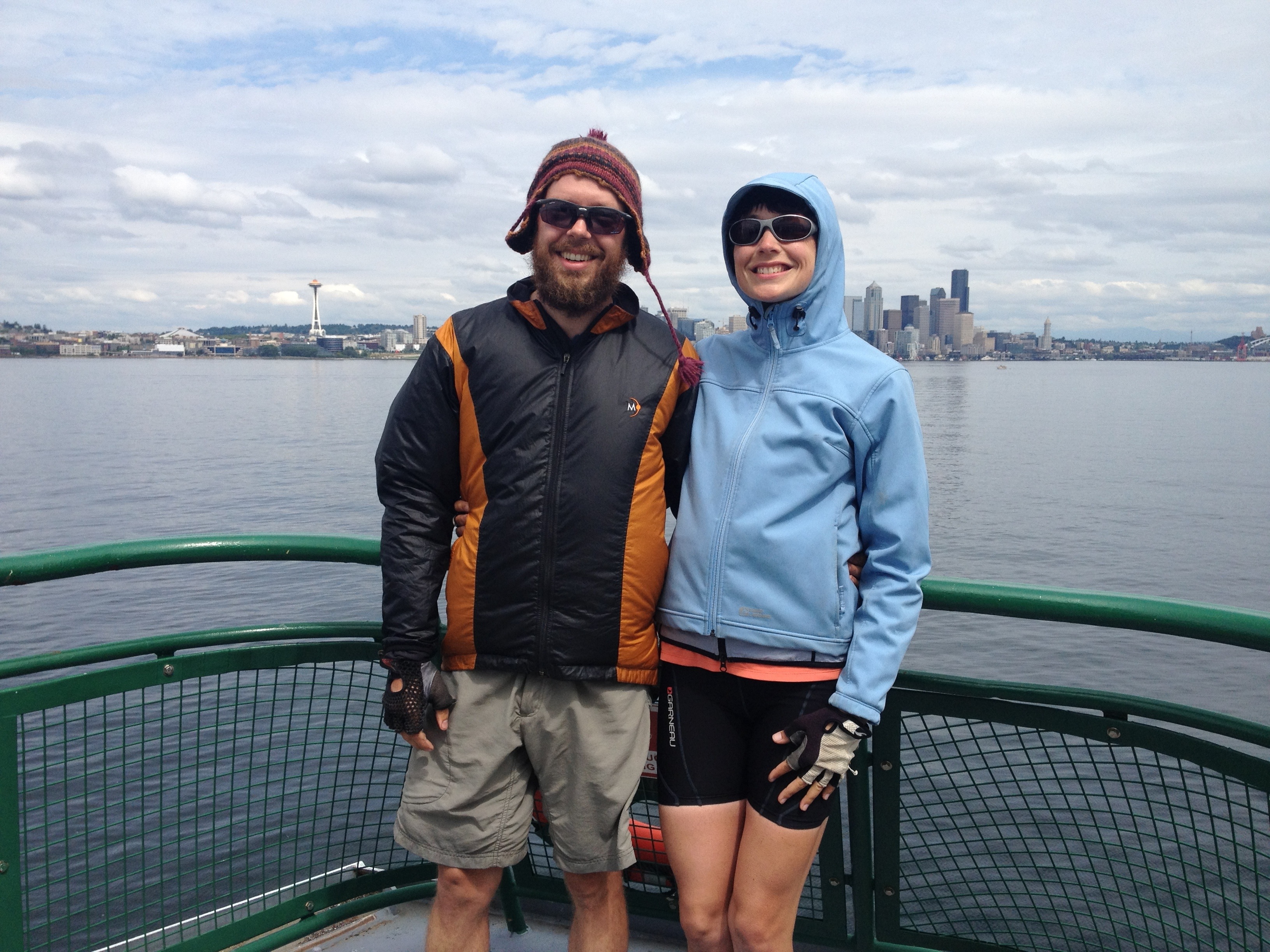
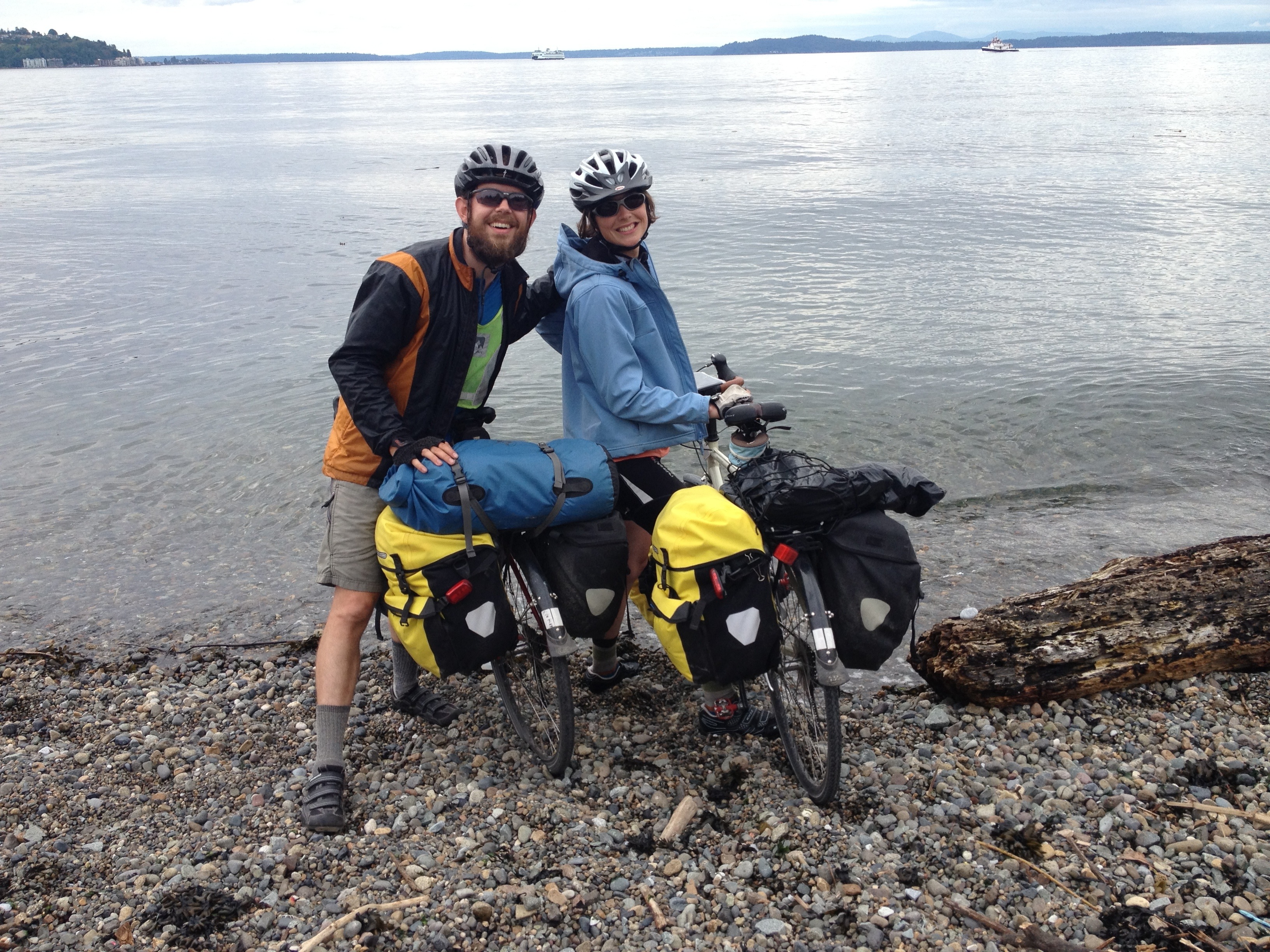
Made it
Thanks to all our supporters along the way! We’ll write a more substantial update soon.
All Downhill
The alarm went off at 6am this morning, our usual wake up time, but as it was steadily raining at our Dagobah-like campsite, we stayed in the tent for another couple of hours. Eventually it was late enough that we had to get going despite the continued drizzle since we didn’t really have the supplies to spend another day out in the boonies. A store with breakfast was only 10 miles away, but first we had to make it over one last big hill of 500 ft or so… really we needed it to get warmed up as the rain continued more or less all day.
As previously mentioned we don’t wind up seeing too much during rain since our glasses get kind of foggy, but we did have a couple interesting conversations. An old guy in a parking lot asked me if I was Swedish, which I’ve definitely never been asked before. Later, while biking past a crosswalk, a ~2yo being carried by her mother said to me “it’s raining, you know…” in a concerned voice. Her mother cracked up. I knew.
To break the monotony of the rain, I got two flat tires. I think it’s easier to get them in the rain as glass and metal stick to the wheel then get more chances to punch through each revolution. Very luckily, both flats happened during respites from the rain so I was able to get patches on easily.
On the positive side, we did pass a really excellent strawberry shortcake stand. Fresh berries in the summer is one thing the NW has that nowhere else can beat.
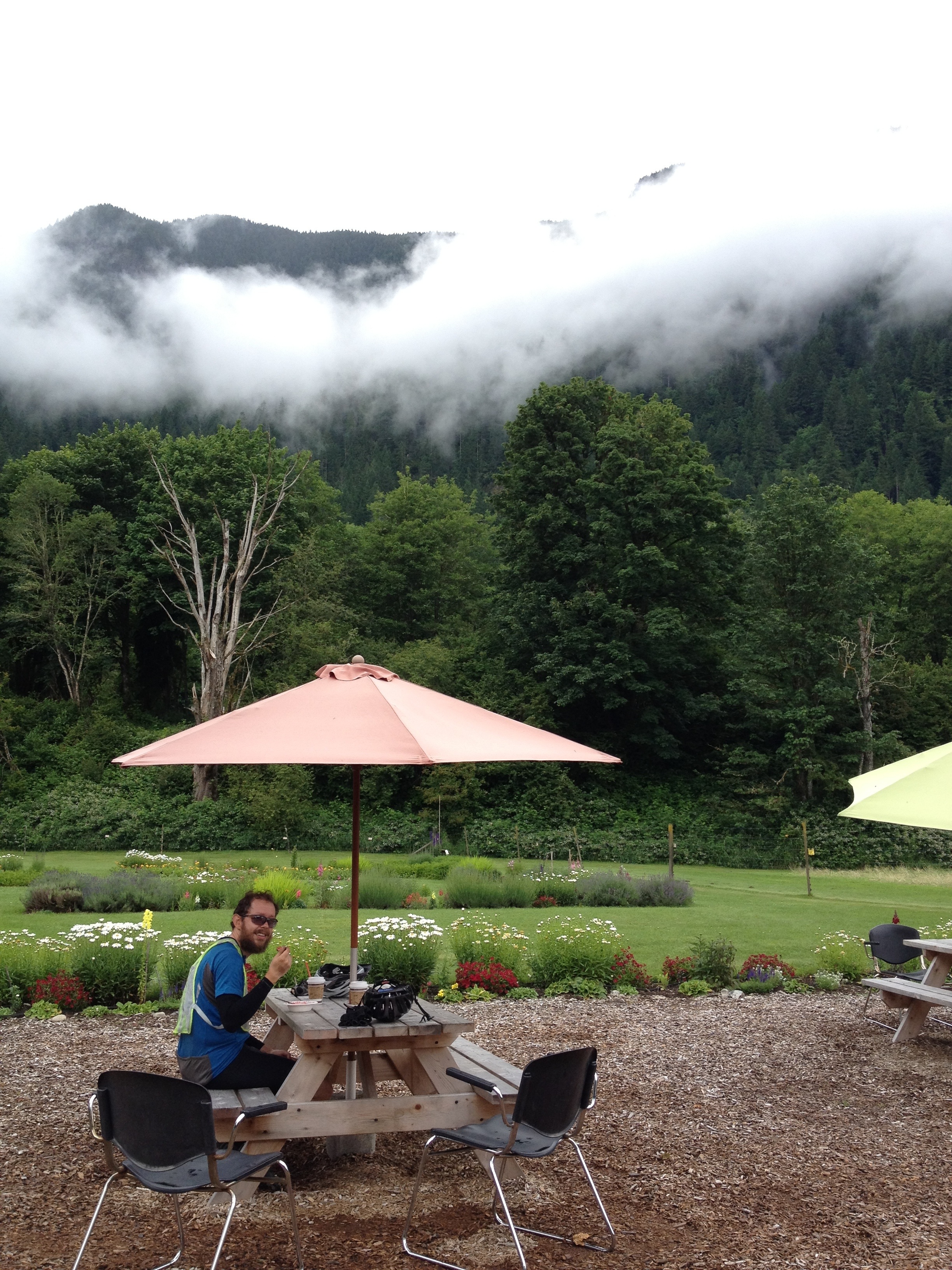
Despite the delays, we made it the 65 miles to Sedro Wooley. Tomorrow only calls for some light showers so we’ll head over to Port Townsend in the morning. Only two more days of riding!
Passed the test!
(Susan here, writing Friday night. I won’t be able to upload pictures and post until Saturday afternoon, I imagine.)
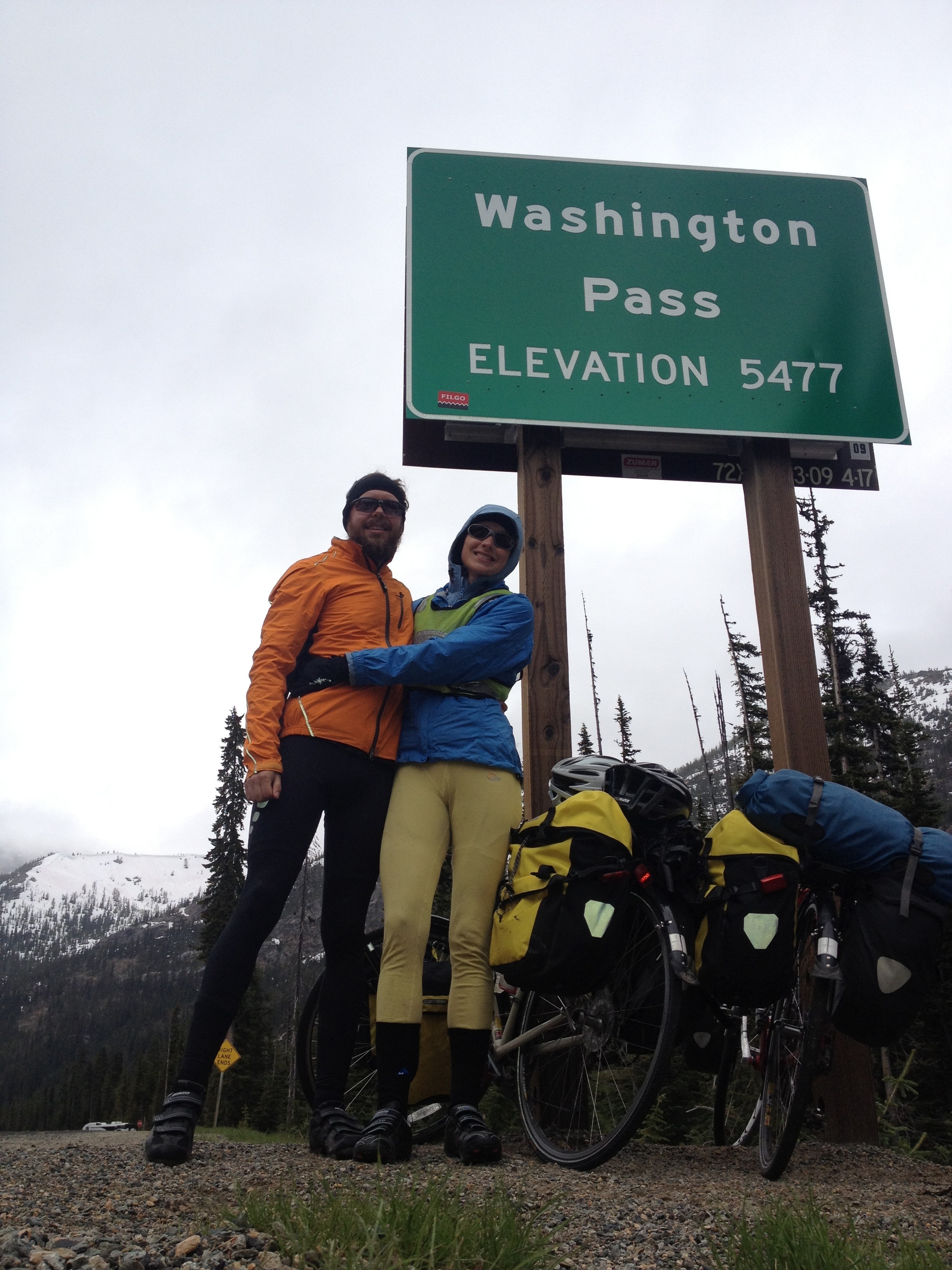
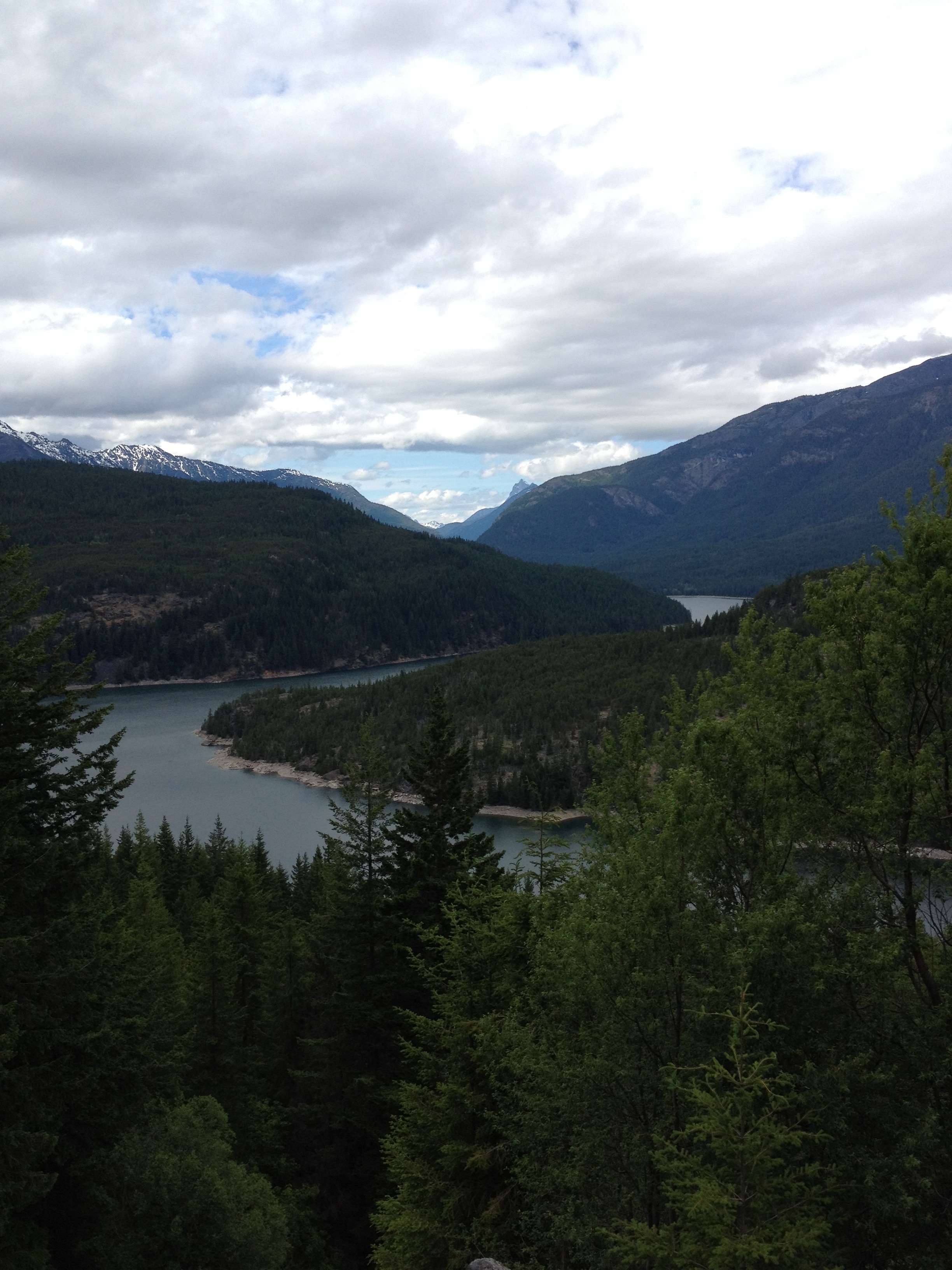
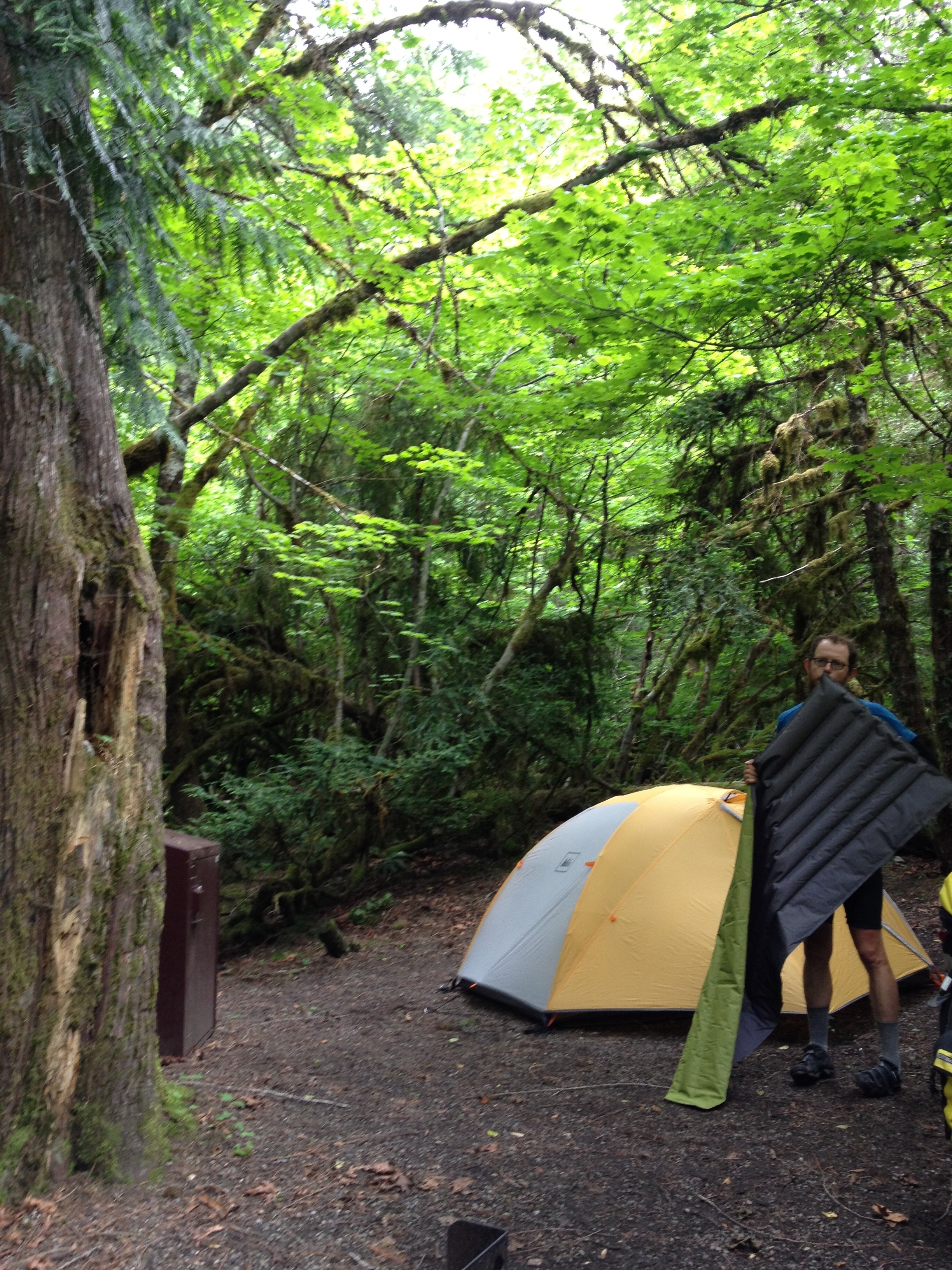
Triumphantly, we biked over Washington Pass today and are camping tonight at the Colonial Creek NPS campground on Diablo Lake, 10 mi. east of Newhalem. For all the work we did today, we’re only 500 feet lower than where we started this morning in Winthrop. Tomorrow we’ll hit up Sedro-Woolley; Sunday we’ll bike to Ebey’s Landing after hitting the coast and catch the ferry down to Port Townsend; Monday we’ll bike to Bainbridge and get the ferry into downtown Seattle for our last day.
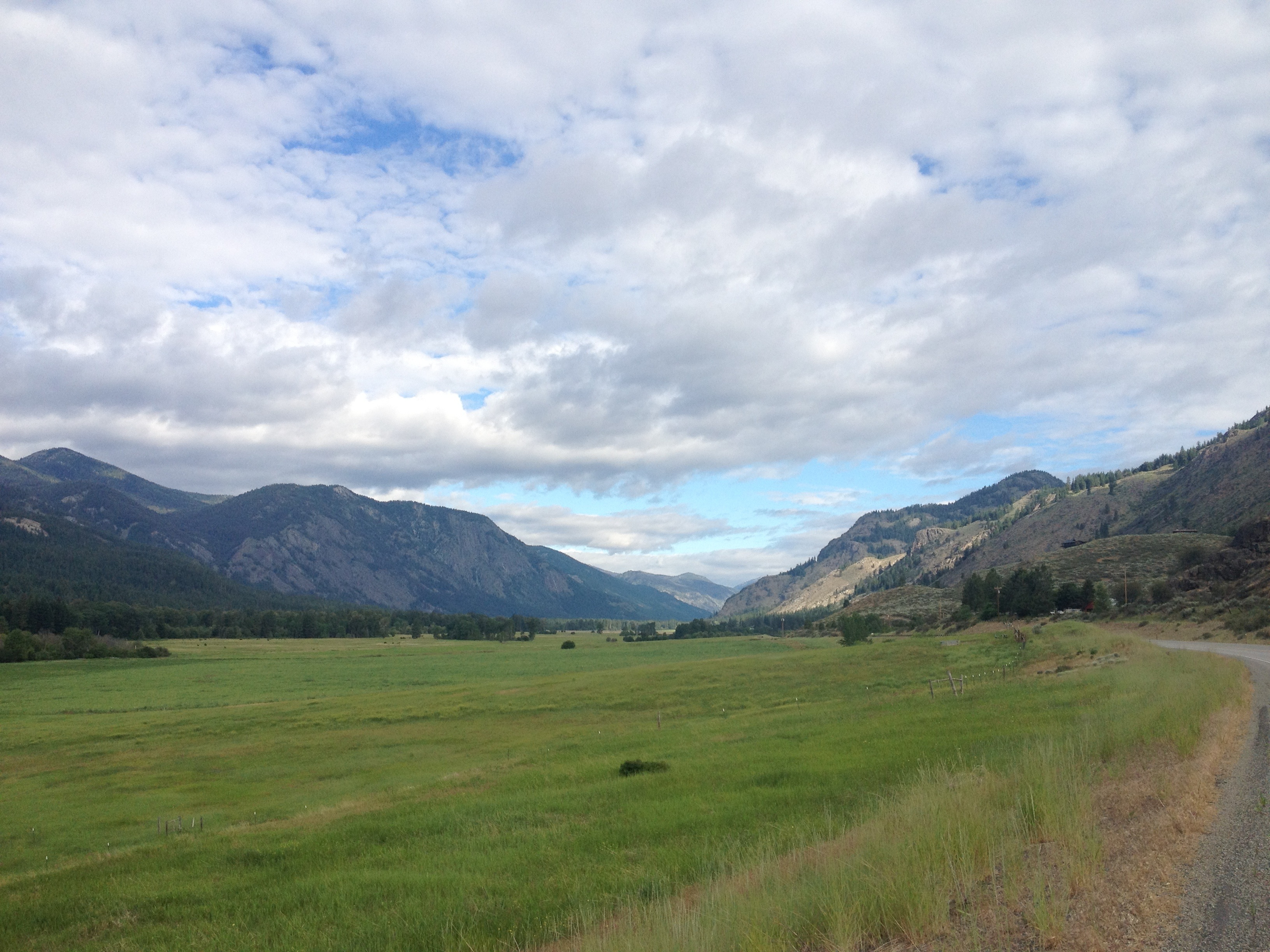
This landscape is just stunning and it amazed me the whole ride up that it is even passable by bicycle at all. It’s also amazing how much the environment here on the west side of the Cascades is worlds away from the desert valley we were in yesterday–our campground is lush and green; all the trees are dripping with moss, and it’s a small miracle that it actually didn’t rain at all today, other than a few drips at the pass.
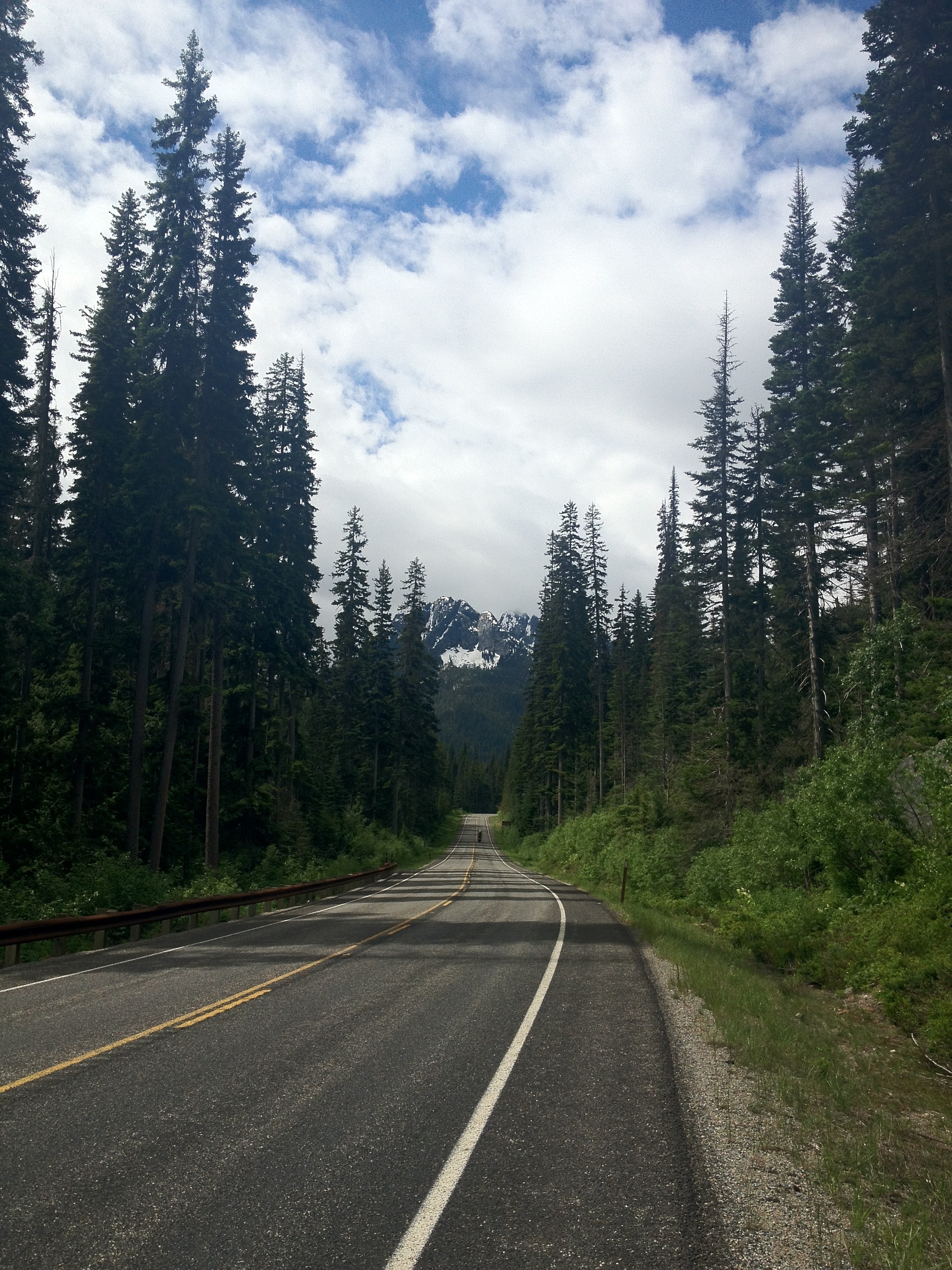
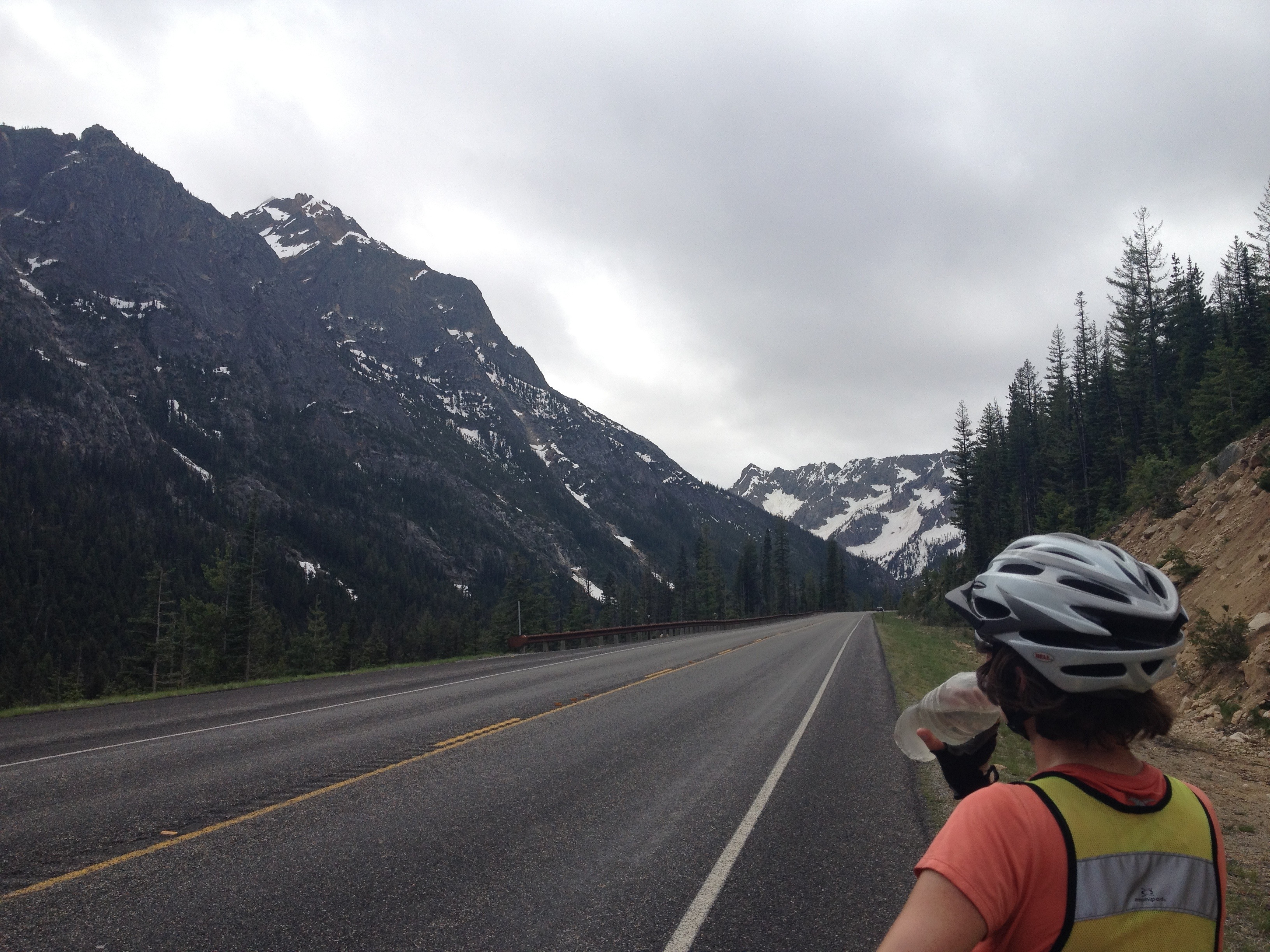
I’ll let the pictures in chronological order speak for themselves:
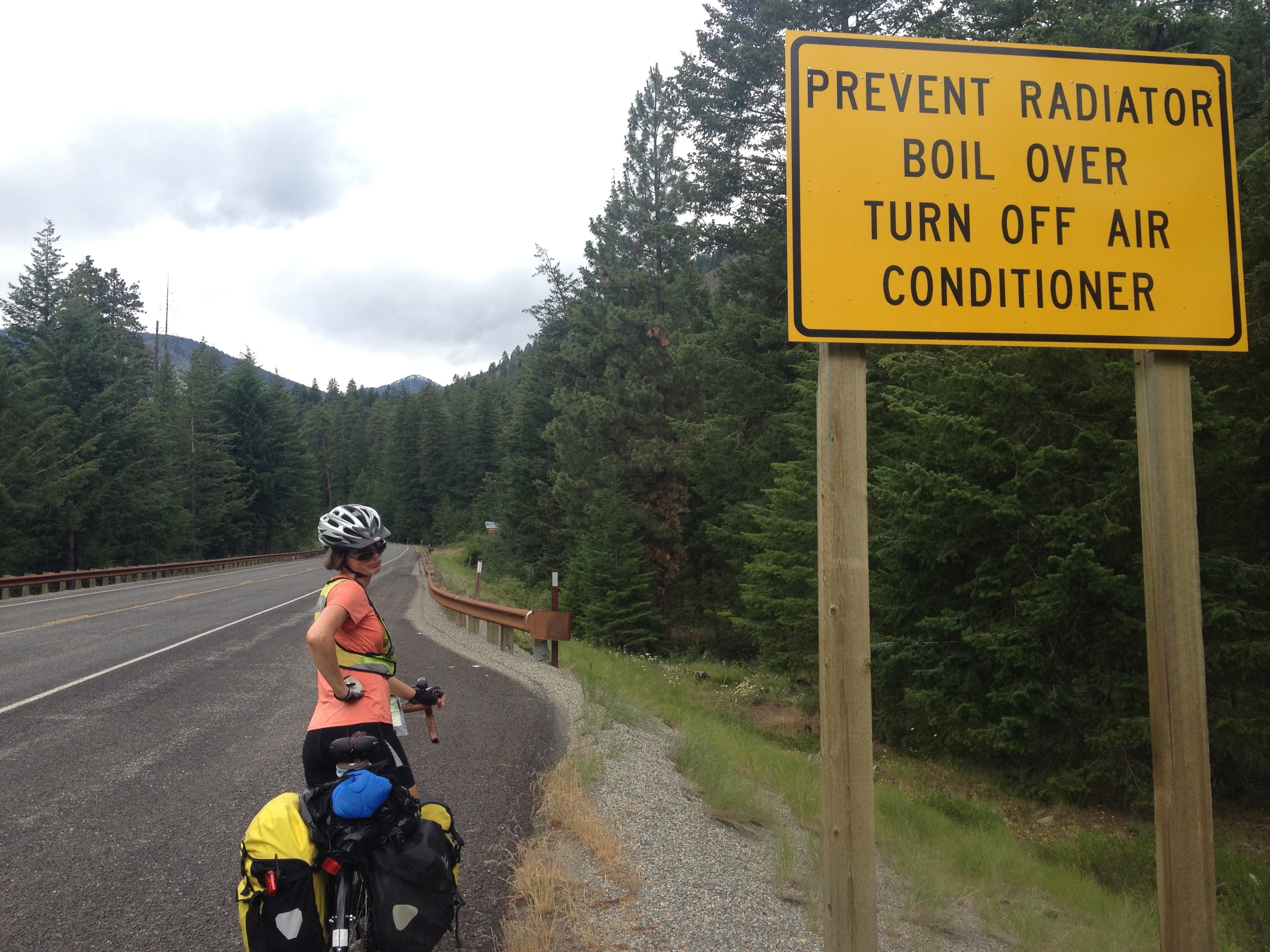
I am skeptical about the utility of this advice:
Snow! :
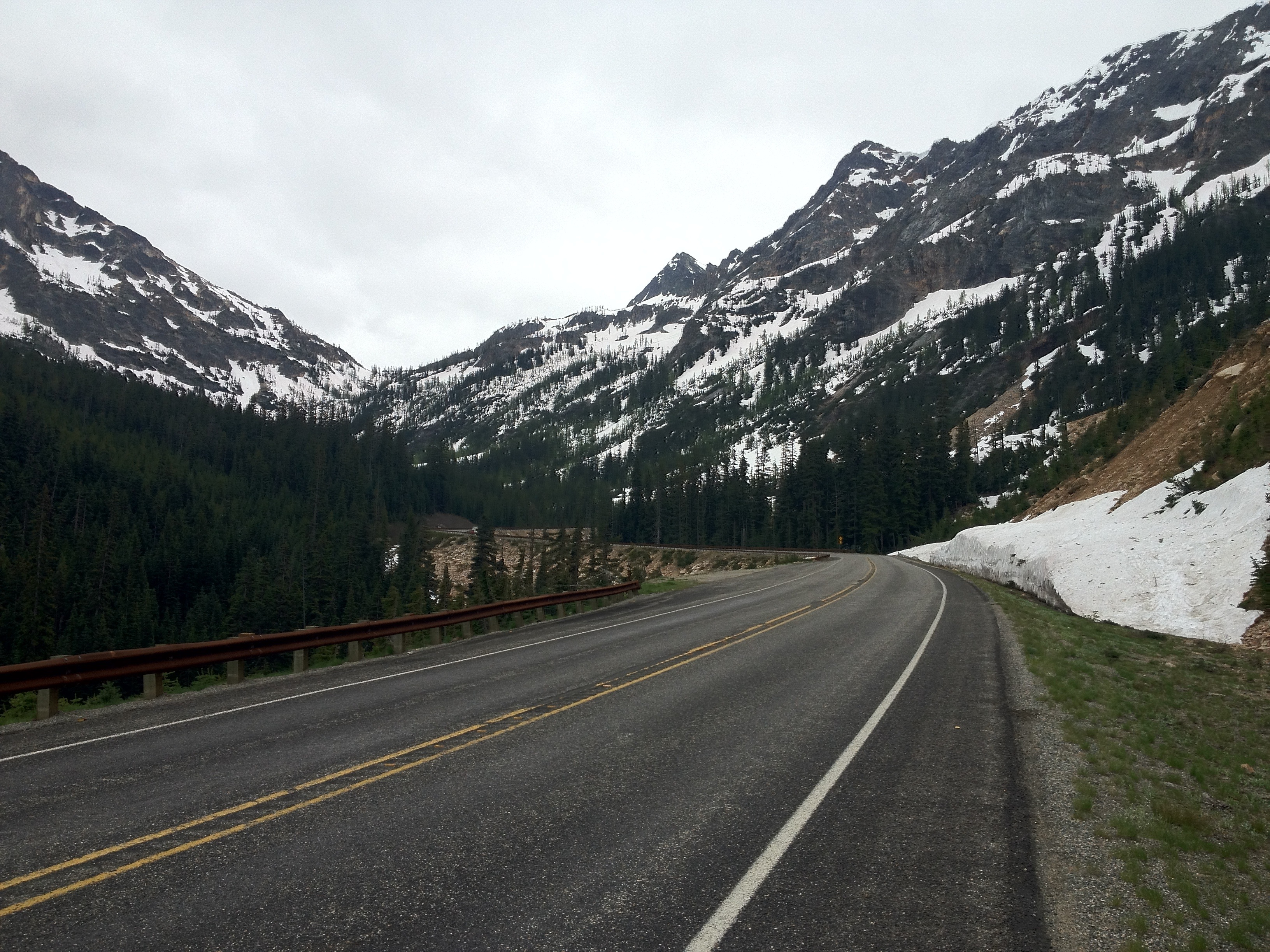
A lot more snow! (this is almost at the pass) :
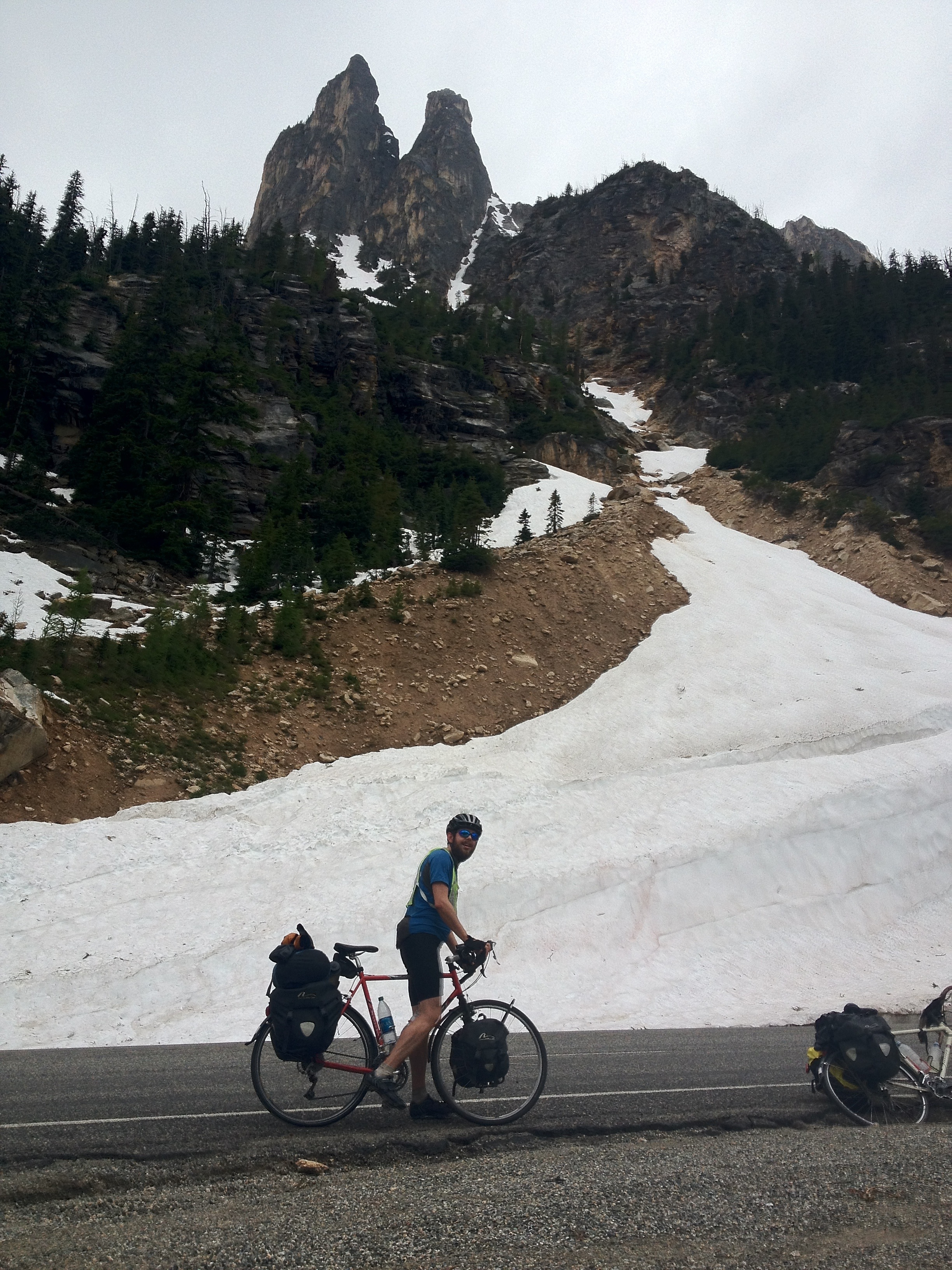
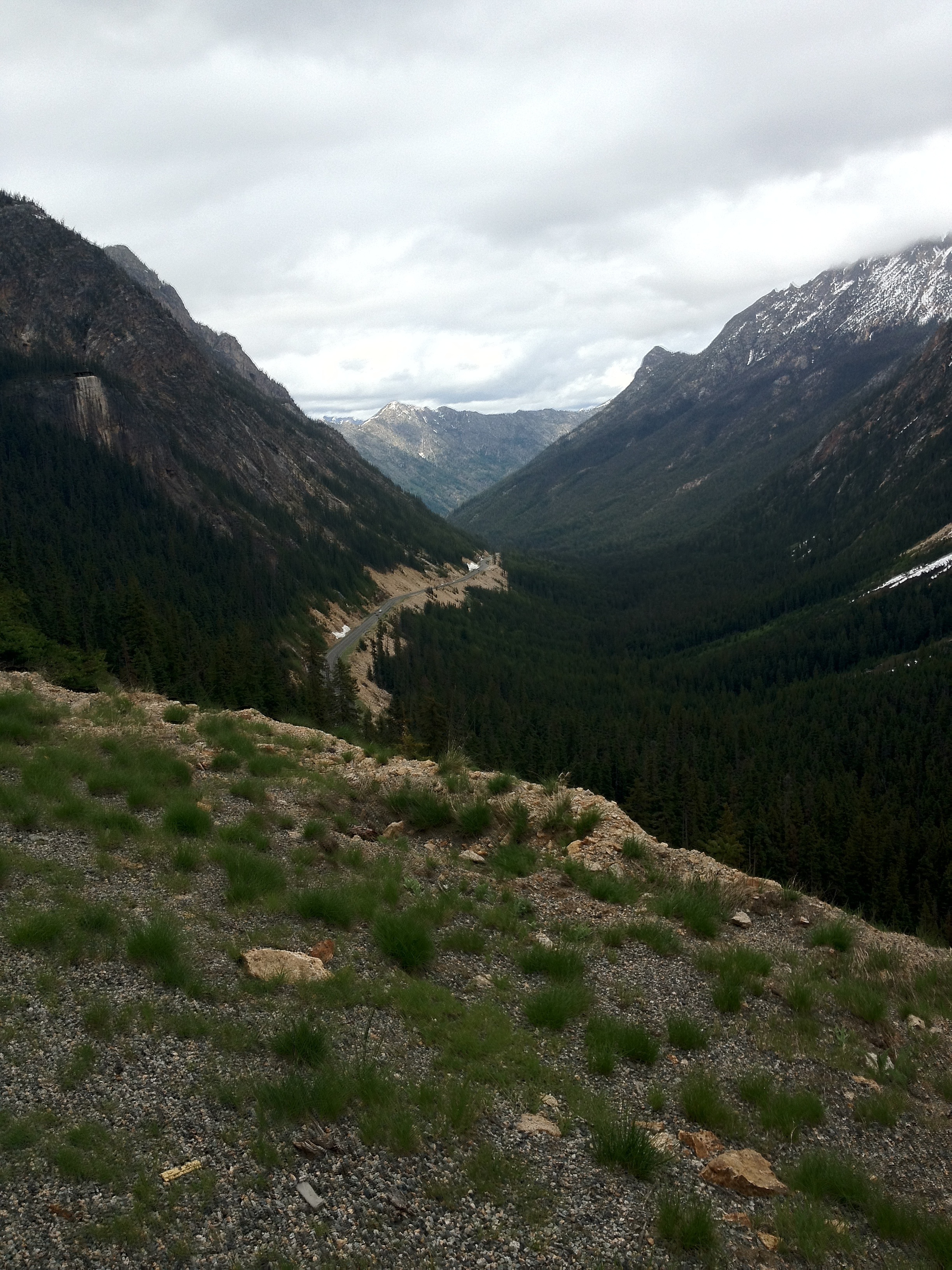
We came from that little road down there! :
Shortly before the following picture was taken, Brice stepped off the road to go pee in the trees and promptly fell chest-deep into a snowbank. He refused to hand me up the iPhone to document the occasion, I can’t imagine why.
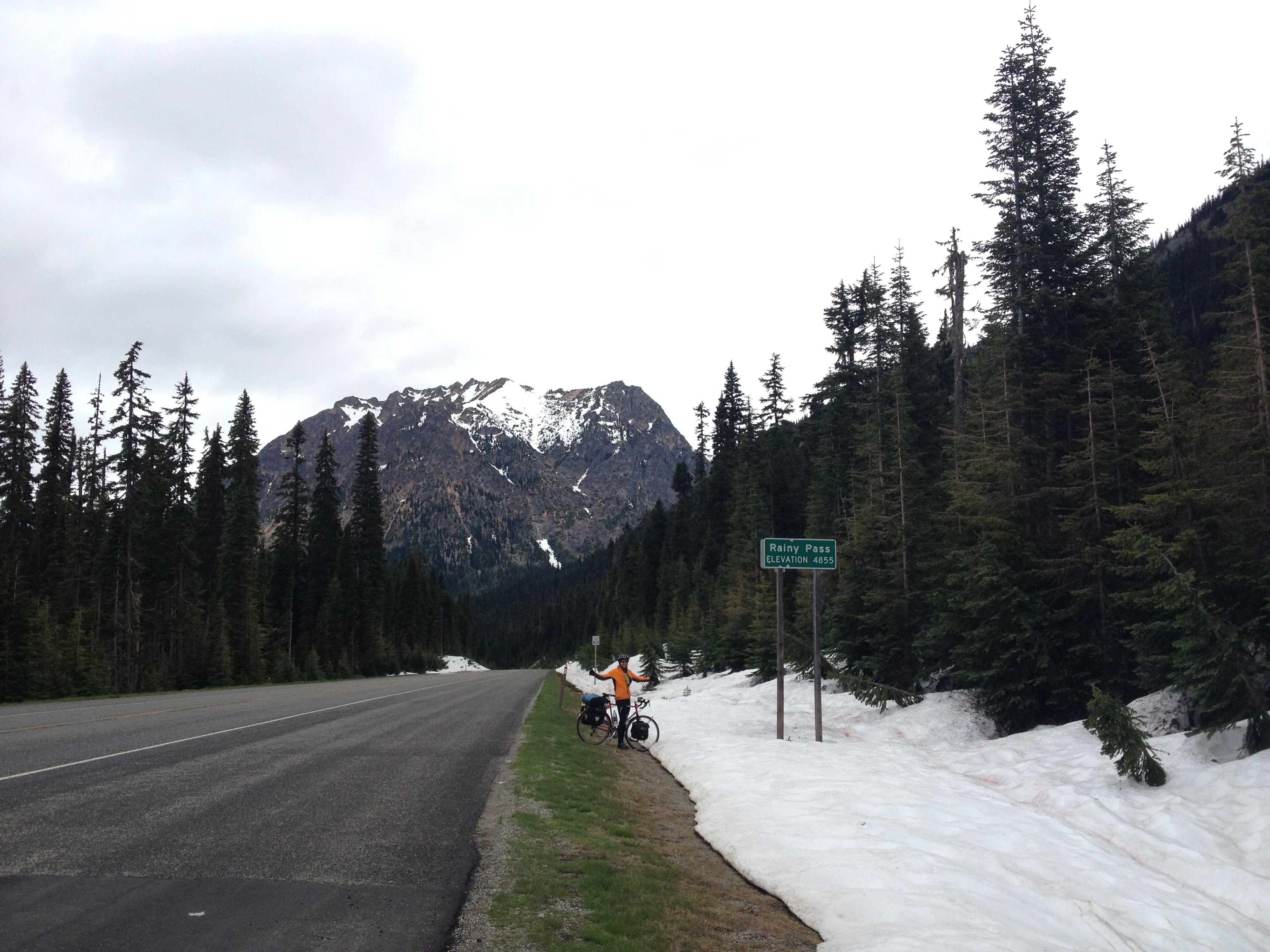
After Washington, this little one was nothing:
We didn’t take nearly as many pictures on the way down because it’s a bummer to stop when you’re coasting like a fiend. Here’s one, of Ross Lake:
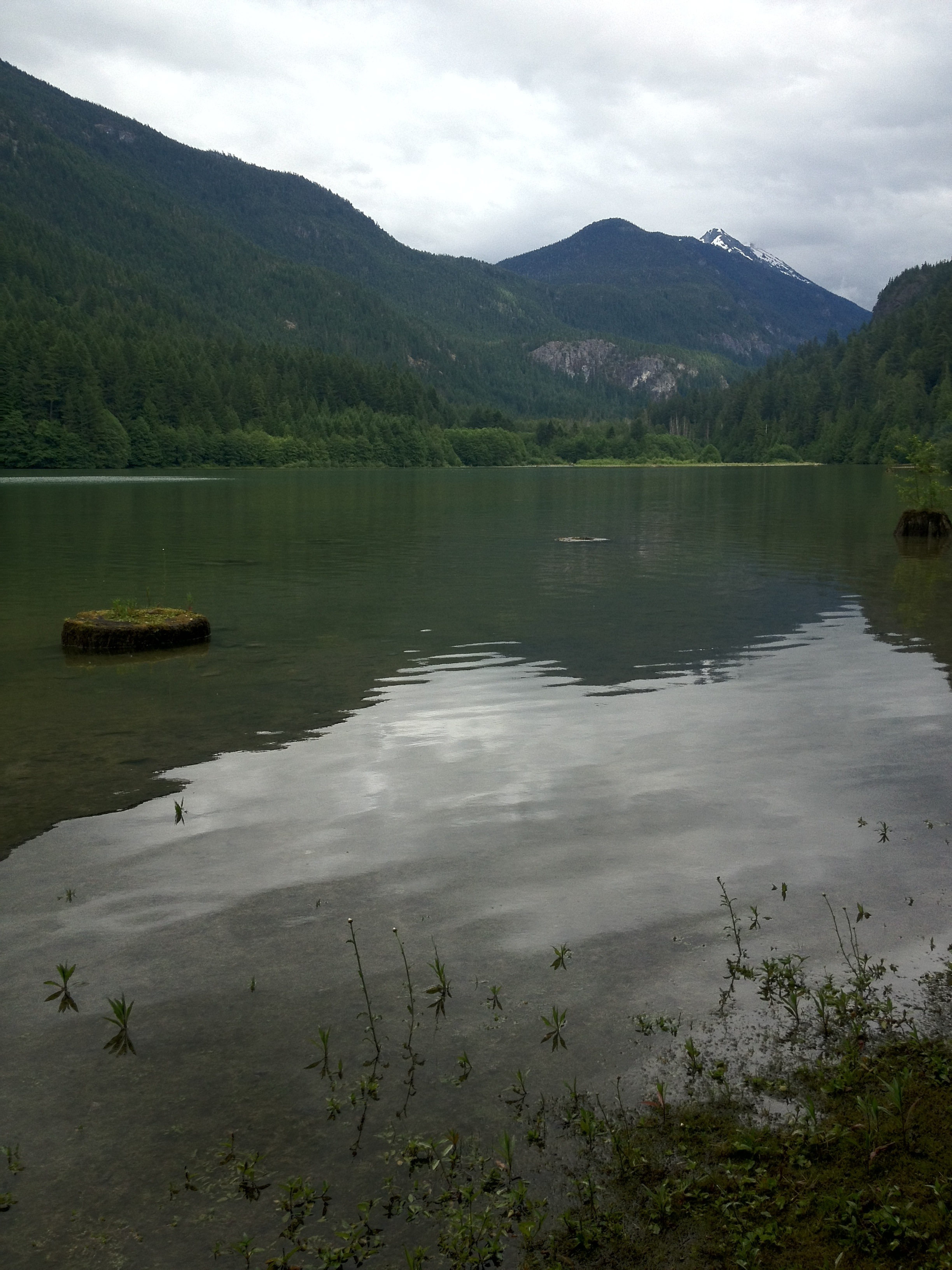
Our campsite and Diablo Lake behind it:
 Susan and Brice's Bike Blog